
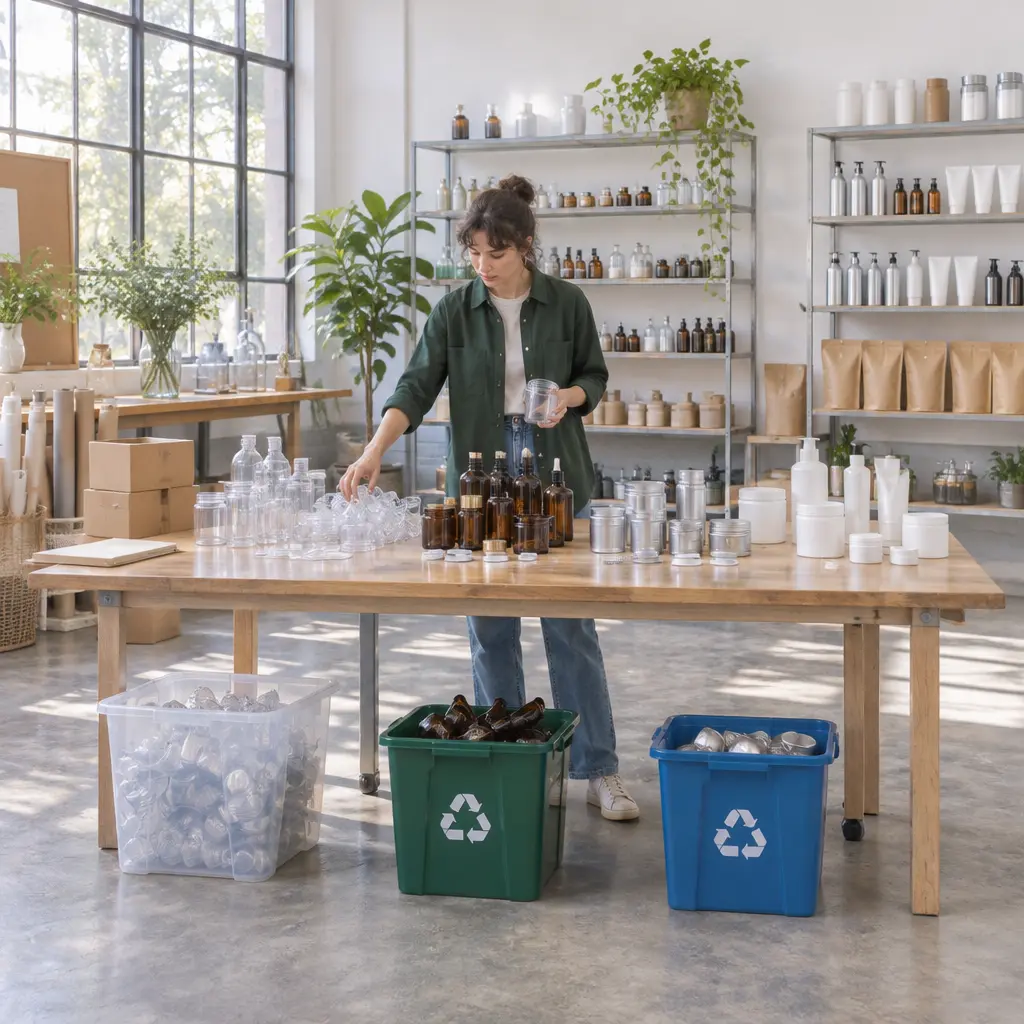
Cosmetic packaging is the containers, closures, labels, and secondary materials used to protect and sell beauty products. Sustainable packaging is not simply packaging that looks natural or carries a recycling symbol: it is packaging designed to reduce environmental impacts across its life cycle while still protecting the product. A glass jar with a plastic pump, a hard-to-recycle refill pouch, or a “recycled” package that is rarely collected can shift waste rather than prevent it. The scale matters: the United Nations Environment Programme estimates that the world produces about 400 million tonnes of plastic waste each year, while the U.S. Environmental Protection Agency’s latest national figures report that containers and packaging made up about 82.2 million tons of municipal solid waste in 2018. Understanding misleading materials, refill systems, recycling claims, and practical design choices helps brands and consumers avoid green-looking packaging that creates more waste.
Sustainable cosmetic packaging is a life-cycle design attribute, not a visual style
Sustainable cosmetic packaging describes packaging whose material use, manufacture, transport, product protection, reuse, and end-of-life management are considered together. The European Commission’s packaging policy frames packaging sustainability around reducing unnecessary packaging and making packaging recyclable or reusable in practice; this perspective is more useful than judging a package by color, texture, or a single material claim. Relevant attributes include how much material is used, whether components can be separated, whether local systems accept them, and whether the design actually achieves repeat use.
The most common misleading approaches are closely related: material swaps that increase weight, mixed-material designs that defeat sorting, refill formats that add layers without replacing the original container, and claims that imply recyclability or environmental superiority without evidence. These problems connect to a central test: does the packaging reduce total material and waste while protecting the cosmetic product?
“Natural-looking” materials can have higher transport and production burdens
A material substitution is a change in packaging material intended to improve environmental performance. It can backfire when a heavier package needs more raw material and fuel to transport, or when its production has higher impacts than the material it replaces. Glass, for example, is widely recyclable, but it is heavier than plastic and can require more energy to manufacture and ship. Whether glass is preferable depends on factors such as recycled content, distance traveled, breakage, package size, and whether the container is reused enough times.
The same caution applies to bamboo, paper, and other “natural” finishes. A bamboo outer shell around a plastic container may add material without replacing the inner packaging. A paper-based pack with a plastic coating or adhesive may also be difficult to recycle in ordinary paper streams. The U.S. Environmental Protection Agency emphasizes that recycling depends on the material being collected, sorted, and processed—not merely on whether a component contains a recyclable material.
Bioplastics and compostable plastics need the right disposal system
Bioplastics are plastics made partly or wholly from biological feedstocks, while compostable plastics are designed to break down under specified composting conditions. The terms do not mean the same thing: a bio-based plastic may not be compostable, and a compostable plastic may require an industrial facility rather than a home compost heap. If consumers put compostable packaging into conventional plastic recycling, it can interfere with recycling streams; if they place it in general waste, it may not receive the conditions needed to break down.
The U.S. Federal Trade Commission’s Green Guides advise that unqualified compostable claims should be supported by evidence that the product can be composted safely and in a timely way in the facilities available to a substantial majority of consumers. Cosmetic brands should therefore identify the required disposal route and check whether it exists where the product is sold. A “plant-based” label alone does not establish that a package is lower-impact or properly managed at end of life.
Cosmetic packaging creates avoidable waste when design ignores real disposal
Packaging waste is shaped by the whole pack, not only its main bottle or jar. Pumps, droppers, mirrors, metallized coatings, labels, seals, and decorative sleeves can complicate separation and sorting. The Association of Plastic Recyclers notes that packaging design affects whether plastic items can be identified and processed by recycling systems. A package can therefore be technically recyclable in one component but impractical to recycle as sold.
This distinction links material choice to system compatibility. In the United States, the EPA reported that 13.6% of plastic containers and packaging generated in 2018 was recycled. That national figure covers a broad category rather than cosmetics alone, but it illustrates why a recycling symbol or resin code should not be treated as proof that a specific cosmetic pack will be recycled in a customer’s community.
Mixed materials and small components can undermine recyclability
Mixed-material packaging combines materials that are difficult to separate, such as plastic with metalized film, attached paper, or multiple polymer types. Small parts—such as caps, pumps, and miniature sample containers—may also be missed by sorting equipment or be uneconomic to process. Even when a bottle is accepted, a spring, metal ball, or layered label may complicate recovery.
A useful design approach is to reduce the number of materials and make parts easy to separate, while checking the rules of the markets where the product is sold. The How2Recycle labeling program, for example, bases its labels on the availability of collection and processing infrastructure, illustrating why disposal instructions need to be specific rather than generic. Brands should validate a claim against current local systems and avoid implying universal recyclability.
Oversized and decorative packaging uses material without improving protection
Overpackaging is packaging that adds layers or volume beyond what is needed to protect, dispense, and transport a product. A rigid outer box, molded insert, plastic window, and decorative sleeve may make a cosmetic feel premium but add material and increase shipping volume. The European Commission has identified packaging waste prevention and minimization as priorities in its packaging policy, reflecting the principle that avoiding unnecessary packaging can be more effective than trying to recycle it later.
Secondary packaging can still be justified when it protects a fragile product, prevents leakage, or provides essential information. The test is evidence: compare damage and returns with and without the extra layer, and measure total material per usable quantity of product. A smaller, lighter pack that causes more breakage or product loss may not be an improvement.
Refillable cosmetic packaging reduces waste only when consumers reuse it
Refillable packaging is a primary container designed to be used repeatedly, with product replenished through a refill or return system. Its environmental benefit depends on repeated use, the materials and energy needed to make the durable container, and the impact of each refill. A refill label alone does not prove that the system reduces waste: the refill must displace enough new packaging to offset its own material and logistics.
The Ellen MacArthur Foundation’s work on reuse systems stresses that reuse models need convenient systems and sufficient return or refill cycles to achieve benefits. For cosmetics, that means a refill should be easy to buy, store, open, and use, while the primary pack should be durable, cleanable where appropriate, and designed for the product’s full life.
Refill pouches can add complexity instead of eliminating packaging
A refill pouch is a flexible package intended to transfer product into a reusable container. It can use less material than a rigid bottle, but many pouches combine plastic films, barrier layers, and closures that are not accepted in ordinary curbside recycling. If shoppers buy a pouch but do not reuse the original bottle, the system may simply add another disposable format.
Brands should compare the pouch’s total material and end-of-life pathway with the original package, including the pouch spout and any outer carton. They should also report whether take-back or specialized collection is genuinely available, rather than suggesting that a complex pouch is routinely recyclable. Refill performance should be measured by actual repeat purchases and avoided primary containers, not by the number of refill products launched.
Durable containers need a credible reuse threshold
A reuse threshold is the number of uses required for a durable package to perform better than an equivalent single-use alternative under defined environmental measures. The threshold varies with container weight, material, cleaning, transport, and the refill format; there is no universal number that applies to every jar or bottle. A heavy glass jar may need many cycles to offset its production and transport burden, while a lightweight durable container may reach the balance sooner.
To make reuse credible, brands can publish the assumptions behind their life-cycle comparisons, design containers for long service, and provide convenient replenishment. Consumers can help by using the same container repeatedly as intended, rather than accumulating decorative “refillable” jars that are eventually discarded.
Environmental packaging claims require evidence and clear limits
An environmental claim is a statement—explicit or implied—that a product or package has a particular environmental benefit. Words such as “green,” “eco-friendly,” “sustainable,” and “zero waste” can imply broad benefits that are difficult to substantiate. The U.S. Federal Trade Commission’s Green Guides caution against broad, unqualified general environmental benefit claims because consumers may interpret them as covering multiple environmental impacts.
The connection between claims and packaging design is practical: a truthful, specific claim helps shoppers understand what to do, while a vague claim can encourage disposal mistakes or conceal trade-offs. The European Union’s policy direction has also emphasized stronger requirements for packaging recyclability and more consistent environmental claims, reflecting growing concern about misleading sustainability marketing.
Recycled-content claims should identify the component and percentage
Recycled content is the proportion of a package made from material recovered from pre-consumer or post-consumer waste. A claim that a “bottle is recycled” may be misleading if it refers only to one component or does not state the share. Clearer communication specifies the component, the percentage, and whether the recycled material is post-consumer content.
Recycled content can support demand for recovered materials, but it does not automatically make a pack recyclable or reusable. A package made with recycled plastic may still contain incompatible parts, and a recyclable design may not be collected locally. Brands should assess material sourcing, package function, and end-of-life together rather than presenting one attribute as a complete sustainability verdict.
Recyclability claims must match local collection and processing
Recyclability in practice means that a package is collected, sorted, and processed into usable material at a meaningful scale in the places where it is sold. The FTC Green Guides advise that claims should be qualified when recycling facilities are not available to a substantial majority of consumers or communities. This is especially relevant for cosmetics, where small formats and complex closures can make a package less compatible with ordinary recycling systems.
A brand should verify acceptance with local waste authorities or credible labeling systems and explain any preparation steps, such as removing a pump or separating a cap. Instructions should not overstate recovery: “check local recycling rules” may be necessary, but it is not a substitute for checking whether the package is commonly accepted.
Better cosmetic packaging starts with reduction, fit, and verification
Better packaging choices prioritize prevention before end-of-life promises. The waste hierarchy commonly places reduction and reuse ahead of recycling because avoiding material use or extending a package’s life can prevent waste upstream. For cosmetic brands, this means using only the protection needed, choosing compatible materials, and testing whether a refill or reuse model works in real customer conditions.
Use a practical packaging decision checklist
- Measure total packaging mass per unit of product, including closures, labels, cartons, and shipping materials.
- Remove decorative layers that do not improve safety, product protection, or necessary communication.
- Prefer simpler material combinations and components that can be separated with ordinary household effort.
- Verify recyclability against current local collection and processing systems for each sales market.
- For refill systems, track actual repeat use and the number of primary containers displaced.
- Substantiate environmental claims with clear scope, evidence, and disposal instructions.
- Protect product quality: a package that causes contamination, leakage, or premature spoilage can waste both packaging and its contents.
Compare options with life-cycle data, not appearance
Life-cycle assessment evaluates environmental impacts across stages such as raw-material extraction, manufacturing, transport, use, and disposal. It can reveal trade-offs that a material label hides—for example, a heavier container may be reusable, but only if it is reused enough; a lightweight flexible pack may use less material, but may be difficult to recycle. The European Commission’s Joint Research Centre provides life-cycle assessment guidance that helps organizations define boundaries and compare options consistently.
A useful comparison should use the same functional unit, such as packaging needed to deliver a fixed quantity of usable product, and disclose key assumptions. Where full assessment is not feasible, brands can still track transparent indicators: grams of packaging per product, recycled-content share by component, damage rates, refill participation, and verified collection availability.
Conclusion: make cosmetic packaging less wasteful in practice
Sustainable cosmetic packaging is defined by its life-cycle performance, not by a natural appearance or a single “recyclable” label. Material swaps can add weight, mixed components can frustrate recycling, refill pouches can become another disposable layer, and broad green claims can obscure the actual disposal route. The most credible path is to reduce unnecessary packaging, design for real reuse or local recycling, protect the product efficiently, and support claims with clear evidence.
Brands can begin by auditing every component and publishing measurable progress; consumers can favor products with practical refill systems, simpler packs, and specific disposal instructions. Before calling a package sustainable, ask what material it uses, how much is needed, how many times it will be used, and whether local systems can manage it. Those questions turn green-looking packaging into accountable packaging.
Sources: United Nations Environment Programme, “Plastic pollution,” https://www.unep.org/plastic-pollution; U.S. Environmental Protection Agency, “Containers and Packaging: Product-Specific Data,” https://www.epa.gov/facts-and-figures-about-materials-waste-and-recycling/containers-and-packaging-product-specific; European Commission, “Packaging waste,” https://environment.ec.europa.eu/topics/waste-and-recycling/packaging-waste_en; U.S. Federal Trade Commission, “Guides for the Use of Environmental Marketing Claims (Green Guides),” https://www.ftc.gov/news-events/topics/truth-advertising/green-guides; Association of Plastic Recyclers, “APR Design Guide,” https://plasticsrecycling.org/apr-design-guide/; How2Recycle, “How2Recycle Label,” https://how2recycle.info/; Ellen MacArthur Foundation, “Reuse: Rethinking Packaging,” https://www.ellenmacarthurfoundation.org/reuse-rethinking-packaging; European Commission Joint Research Centre, “Environmental Footprint methods,” https://environment.ec.europa.eu/news/environmental-footprint-methods-2021-12-16_en