
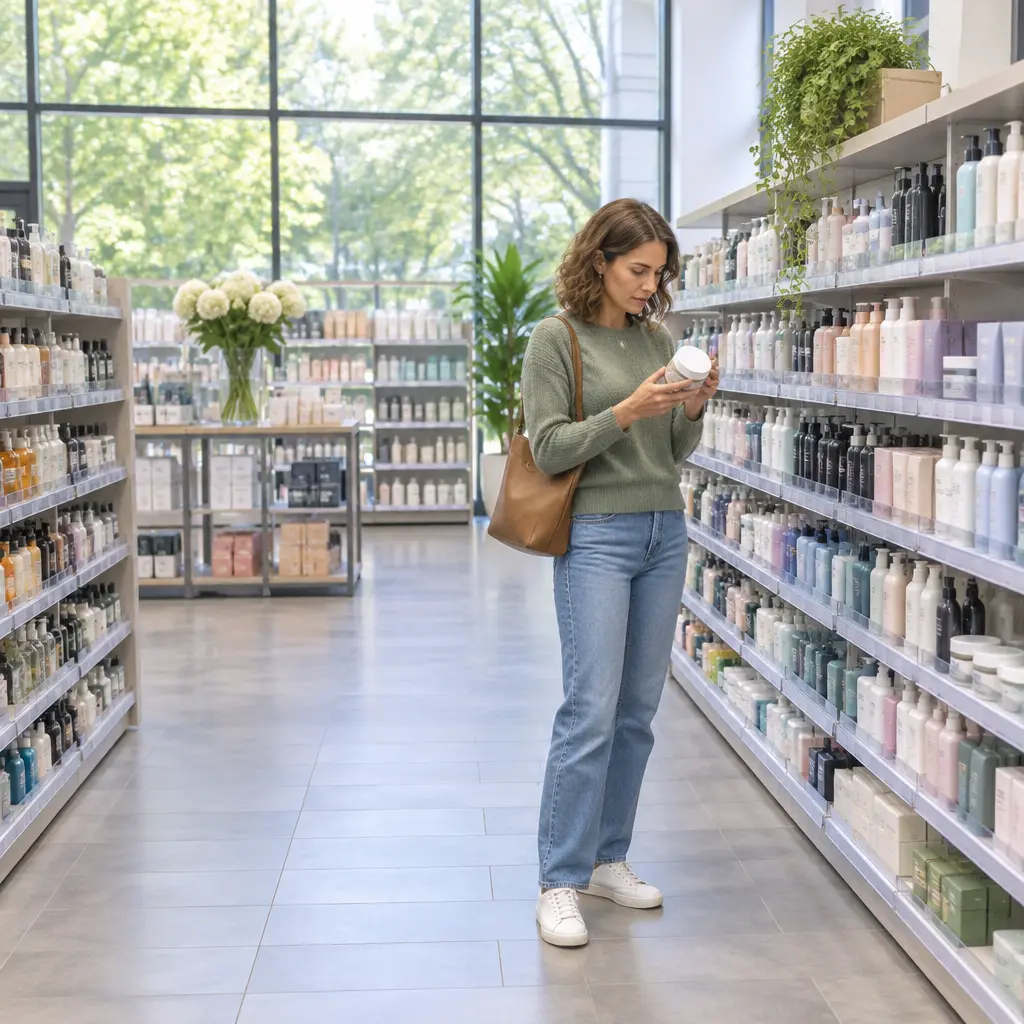
Sustainable beauty labels are product claims, ingredient disclosures, and third-party certifications that suggest a cosmetic is made with environmental or social considerations in mind. Reading them without being misled means checking what a claim refers to, looking for evidence and certification scope, and comparing the full ingredient list and packaging—not relying on words such as “clean,” “natural,” or “green.” This matters in a market where packaging and environmental claims can be difficult to verify: the U.S. Federal Trade Commission’s Green Guides warn against broad, unqualified claims such as “green” or “eco-friendly,” while the European Commission reported in 2021 that 42% of online green claims it examined were potentially exaggerated, false, or deceptive. The sections below explain common label terms, how certifications work, how to assess ingredients and packaging, and how to spot claims that need closer scrutiny.
Sustainable beauty labels describe claims, not a single standard
A sustainable beauty label is not one universally defined rating. It may refer to a product’s ingredients, manufacturing, animal testing policy, packaging, or broader corporate practices. The U.S. Federal Trade Commission (FTC) advises businesses to qualify environmental marketing claims clearly and specifically; a claim about one attribute should not imply that the entire product is environmentally beneficial.
That distinction is important because “sustainable beauty” includes several related but separate ideas: natural or organic sourcing, cruelty-free testing policies, reduced packaging, recycled content, and lower-impact production. A product may perform well on one dimension and poorly on another. For example, a recyclable container does not prove that the formula is biodegradable, and a certified organic ingredient does not establish that the finished product is organic or low-carbon.
“Natural” and “clean” are not universal guarantees
“Natural” generally suggests ingredients derived from nature, while “clean” is a marketing term often used to imply that a formula avoids certain ingredients. Neither term, by itself, gives shoppers a consistent, legally standardized measure of environmental impact or safety. Definitions vary by company and retailer, so look for a stated ingredient policy and check whether it identifies specific substances and explains why they are excluded.
Natural origin is not a safety score: naturally occurring substances can cause irritation or allergic reactions, and synthetic ingredients are not automatically harmful. The U.S. Food and Drug Administration (FDA) notes that cosmetic ingredients generally do not require its approval before they are marketed, with certain exceptions such as color additives. Consumers should therefore consider the complete ingredient declaration, intended use, and personal sensitivities rather than treating “natural” or “clean” as proof of safety.
“Organic” applies to a defined scope
“Organic” may refer to agricultural ingredients or to a product certified under a particular program; the exact meaning depends on the jurisdiction and certification. In the United States, the U.S. Department of Agriculture (USDA) National Organic Program sets requirements for products making covered organic claims. A cosmetic containing an organic ingredient is not automatically USDA-certified, and USDA certification alone does not certify a cosmetic’s overall environmental performance.
Check the wording and certification mark, then confirm what it covers. Is it the whole product, a percentage of the formula, or only a named ingredient? This scope check helps distinguish a meaningful, verifiable claim from a broad impression created by organic imagery or wording.
Third-party certifications validate specific beauty-label attributes
A third-party certification is an assessment by an organization other than the brand, against a defined standard. It can make a claim more checkable, but certification does not mean that every aspect of a product is sustainable. The relevant question is what the standard measures, which products or ingredients are covered, and whether the certification is current.
Cruelty-free marks address animal-testing criteria
Cruelty-free programs typically evaluate policies concerning animal testing, but their rules and supply-chain requirements differ. A logo may address the finished product, ingredients, suppliers, or a company’s broader practices. Verify the mark in the certifier’s directory and review its criteria; a brand’s own “not tested on animals” statement is not the same thing as independent certification.
Animal-testing rules also vary by market and product category. The European Union’s cosmetics framework prohibits animal testing for cosmetic products and ingredients for the purposes covered by its law, while other legal systems and requirements may differ. A label should not be interpreted as a universal description of every test conducted anywhere in a supply chain.
Ingredient and environmental certifications have distinct scopes
Programs such as COSMOS certify cosmetics against defined criteria for matters including ingredient origin, processing, and environmental practices. Other standards may focus on particular ingredients, responsible sourcing, or company-level practices. These distinctions matter: certification of a raw material does not necessarily certify the finished formula, and a company certification does not necessarily mean every product meets the same product-level standard.
Look for the certifier’s name, the precise standard, and a way to verify the claim. A vague badge without an identifiable organization or public criteria is harder to assess. When a label says “certified,” check the certifier’s own database or explanatory materials rather than assuming all certifications cover the same environmental and social issues.
Ingredient lists reveal what front-label claims leave out
The ingredient list, often headed “Ingredients” or “Ingredients/Ingredients,” provides a more specific account of a cosmetic’s formula than promotional wording. In the United States, FDA labeling rules generally require cosmetic ingredients to be listed in descending order of predominance, subject to exceptions and specific rules. That makes the list useful for comparison, but it does not by itself disclose an ingredient’s full environmental footprint, sourcing history, or concentration in every case.
Read ingredient names alongside the claim
When a product highlights “plant-based,” “biodegradable,” or “reef-friendly,” ask which ingredient or product feature the claim concerns and what evidence supports it. Plant-derived ingredients can involve land, water, and processing impacts; biodegradability depends on the substance and the conditions under which it breaks down. “Reef-friendly” is not a single universal certification, so look for named ingredients, test methods, and an explanation of the claim’s limits.
Ingredient names can also appear unfamiliar without indicating a problem. The International Nomenclature of Cosmetic Ingredients (INCI) system standardizes cosmetic ingredient naming, helping consumers and professionals identify ingredients across products. Use reputable ingredient references for context, but avoid treating online “toxic ingredient” lists as definitive safety assessments: hazard, dose, exposure, and product use all matter.
Separate safety, sourcing, and environmental impact
These are different questions. A safety assessment considers whether an ingredient may cause harm under expected conditions of use; sourcing concerns how it is obtained and whether labor or ecosystem impacts are addressed; environmental impact considers factors such as production, transport, use, and disposal. One “free-from” claim cannot answer all three.
The FDA advises consumers to follow product directions and pay attention to warnings, especially for products used near the eyes or on sensitive skin. If a claim promises that a formula is “non-toxic” or “chemical-free,” treat it cautiously: all ingredients are chemicals, and such broad language does not explain the actual risk or evidence.
Packaging claims need evidence about materials and disposal
Packaging is one visible part of a product’s footprint, but claims such as “recyclable,” “refillable,” and “made with recycled material” describe different things. The FTC Green Guides say recyclable claims should be qualified when recycling facilities are not available to a substantial majority of consumers. Local collection rules and the packaging’s material, size, color, and component mix can affect whether it is actually accepted.
“Recyclable” depends on local collection systems
A package labeled recyclable may still be rejected by a local program, especially if it combines materials or includes small pumps, caps, mirrors, or other components that must be separated. Check your municipality’s recycling guidance and follow any instructions to empty, rinse, or separate parts. The word on the package is not proof that the item will be recycled in your area.
The U.S. Environmental Protection Agency (EPA) emphasizes reducing and reusing materials before recycling in its waste-management hierarchy. That principle helps put packaging claims in perspective: a durable refill system may reduce some packaging demand, but its benefits depend on whether consumers reuse it, what the refill is made from, and how the system is transported and processed.
“Refillable” and “recycled content” need specifics
“Refillable” means a container is designed to be used again, but the practical benefit depends on the availability and use of refills. Ask whether refills are sold widely, whether the original container is durable, and whether refills reduce material use compared with buying another complete package.
“Made with recycled content” should ideally state the percentage and whether the content is post-consumer or pre-consumer material. The FTC Green Guides call for clear qualification of recycled-content claims when the product or packaging is not made entirely from recycled material. A percentage and a clearly identified component provide more useful information than a generic green icon.
Greenwashing warning signs are broad, unsupported, or irrelevant claims
Greenwashing occurs when marketing gives a misleading impression of environmental benefit. In its 2021 screening of online claims, the European Commission and national consumer authorities found that 42% of claims reviewed had the potential to be false or deceptive, and that 59% offered no easily accessible evidence. These findings covered a broad range of consumer products and services—not cosmetics alone—but demonstrate why shoppers should look for specific, verifiable wording.
Watch for vague claims and green imagery
Words such as “eco-friendly,” “planet-safe,” and “conscious” are difficult to evaluate when they are not tied to a clearly defined feature. Leaves, earth-toned packaging, and nature photography can create an environmental impression without proving a product claim. The FTC’s Green Guides caution that broad, unqualified general environmental benefit claims are difficult to substantiate and may mislead consumers.
A more useful claim names the attribute and its scope: for example, a stated percentage of recycled plastic in the bottle, accompanied by information about which packaging component is covered. Specificity does not guarantee a large benefit, but it makes the claim easier to verify and compare.
Check whether the claim is material and current
A claim can be technically true yet distract from more significant impacts. “Free from” a substance that is not normally used in the product category, for example, may offer little meaningful information. Similarly, a company’s sustainability pledge may describe a future target rather than current product performance.
Look for dates, measurable targets, progress reports, and independent verification. A label that identifies the product or packaging component, explains the method, and gives supporting evidence is more informative than a broad brand-level promise. When the supporting details are absent, treat the claim as unverified rather than as proof.
A practical checklist makes label reading more reliable
A quick, repeatable check can help shoppers compare products without expecting any single logo or phrase to settle every question:
- Identify the exact claim: ingredient origin, animal testing, packaging, sourcing, or another attribute.
- Check its scope: the whole product, a particular ingredient, one package component, or the company as a whole.
- Look for evidence: a named standard, certification criteria, a percentage, a test method, or a dated report.
- Verify the certifier or claim in the organization’s own materials where possible.
- Read the ingredient declaration and compare products on the same basis.
- Check local recycling instructions instead of assuming a package is accepted because it says “recyclable.”
- Compare practical use: a product that is unused, discarded, or replaced quickly may not deliver the benefits suggested by its label.
For example, compare two moisturizers: one says “earth-friendly” beside green leaf imagery; the other specifies that its bottle contains a stated proportion of recycled plastic and identifies the certification standard used for its organic ingredients. The second offers more checkable information, but shoppers should still verify the certification scope and whether the bottle is accepted by local recycling services. This illustrates why labels are best treated as evidence to examine, not verdicts to accept.
Conclusion: Read the claim, scope, and evidence together
Sustainable beauty labels cover distinct attributes, from ingredient sourcing and animal-testing policies to recycled content and refill systems. “Natural,” “clean,” and “eco-friendly” are not interchangeable with independent certification, and even a credible certification applies only to the scope defined by its standard. Ingredient lists, packaging details, local recycling rules, and supporting evidence help fill in what front-label language leaves unsaid.
The broader lesson is to reward clarity rather than imagery or sweeping promises. Before buying, identify what a claim covers, check whether it is verifiable, and compare the product’s practical details. For further reading, consult the FTC Green Guides, FDA cosmetic-labeling guidance, USDA organic-program information, and your local recycling authority.
Sources: Federal Trade Commission, Guides for the Use of Environmental Marketing Claims (Green Guides), https://www.ftc.gov/legal-library/browse/rules/green-guides; European Commission, Screening of websites for ‘greenwashing’: half of green claims lack evidence, 2021, https://ec.europa.eu/commission/presscorner/detail/en/ip_21_269; U.S. Food and Drug Administration, Cosmetics: Ingredients, https://www.fda.gov/cosmetics/cosmetic-ingredients; U.S. Department of Agriculture, National Organic Program, https://www.ams.usda.gov/about-ams/programs-offices/national-organic-program; COSMOS-standard AISBL, COSMOS-standard, https://www.cosmos-standard.org/the-cosmos-standard/; European Commission, Cosmetics, https://single-market-economy.ec.europa.eu/sectors/cosmetics_en; U.S. Environmental Protection Agency, Sustainable Materials Management: Non-Hazardous Materials and Waste Management Hierarchy, https://www.epa.gov/smm/sustainable-materials-management-non-hazardous-materials-and-waste-management-hierarchy; U.S. Food and Drug Administration, Cosmetic Labeling Guide, https://www.fda.gov/cosmetics/cosmetics-labeling-regulations/cosmetics-labeling-guide; International Nomenclature of Cosmetic Ingredients, About INCI, https://inci.personalcarecouncil.org/.