
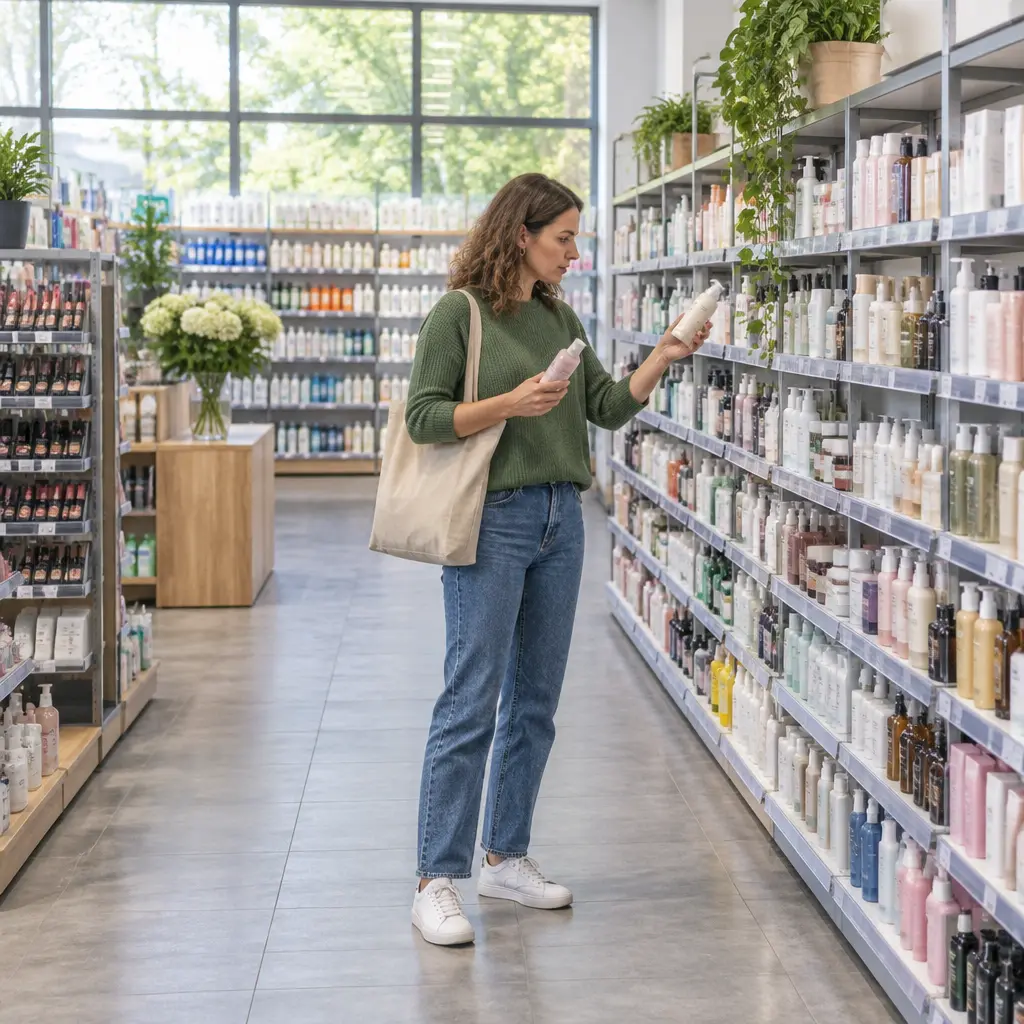
Cruelty-free, vegan, and sustainable describe different things about a product: whether animal testing was involved, whether animal-derived ingredients are present, and how its production affects environmental and social systems. They are not interchangeable, and a product can meet one, two, all three, or none of these criteria. The distinctions matter in a global cosmetics market worth hundreds of billions of dollars, where consumers face varied rules, voluntary certification programs, and environmental claims that can be difficult to compare. Understanding each term—and checking what a label actually verifies—makes purchasing decisions more informed.
Cruelty-Free Products Address Animal Testing
“Cruelty-free” generally means that a product or its ingredients were not tested on animals, but it has no single, universally accepted definition across all markets. The U.S. Food and Drug Administration says federal law does not specifically require cosmetic animal testing, while also noting that companies must substantiate product safety using appropriate methods. The term therefore depends on a company’s policies, supply chain, and the scope of any certification—not simply the presence of a bunny symbol.
Product Testing and Ingredient Testing
A cruelty-free claim may refer to testing of the finished product, its individual ingredients, or both. A company might avoid testing finished cosmetics on animals while relying on ingredient safety data generated elsewhere or at an earlier date. Consumers should look for policies that specify whether they cover ingredients, suppliers, contract manufacturers, and testing conducted on the company’s behalf.
Certification and Legal Differences
Independent programs can make claims easier to assess, although their standards and auditing methods differ. Leaping Bunny, for example, describes a standard that includes a fixed cut-off date for animal testing and monitoring of suppliers. The European Union has prohibited animal testing for finished cosmetics and cosmetic ingredients, and the marketing of cosmetics tested on animals, subject to the details of its regulations. Rules are not identical worldwide, so a brand’s market presence alone does not establish what its cruelty-free claim means.
Cruelty-free status concerns testing practices, not a product’s ingredients. That distinction leads to the separate question answered by “vegan.”
Vegan Products Exclude Animal-Derived Ingredients
A vegan product is generally formulated without ingredients derived from animals. Veganism is commonly understood more broadly as avoiding animal exploitation, but product labels usually make a narrower claim about composition. The Vegan Society’s trademark standards, for instance, address animal ingredients and animal testing in the development or production of products registered under its scheme. Other labels may use different criteria, so certification details matter.
Common Animal-Derived Ingredients
Ingredients of animal origin can appear under technical or familiar names. Beeswax, lanolin from sheep’s wool, carmine made from insects, and some forms of collagen and keratin are examples. A product can be cruelty-free yet contain these ingredients if no animal testing was involved. Conversely, a formula made without animal-derived ingredients is not necessarily cruelty-free if animal testing occurred in its development or supply chain.
Vegan Claims and Ingredient Traceability
Ingredient origin can be hard to determine from an ingredient list alone. Some substances, including glycerin, squalane, and lactic acid, can be sourced from either plant, animal, or synthetic inputs. Certification or a clear manufacturer disclosure can help confirm the source. Vegan also does not automatically mean environmentally preferable: plant-based ingredients may still be linked to land conversion, intensive water use, or harmful labor conditions.
If cruelty-free concerns testing and vegan concerns composition, sustainability takes a wider view of a product’s impacts across its life cycle.
Sustainable Products Consider Environmental and Social Impacts
“Sustainable” is a broad term describing efforts to meet present needs while limiting harm to environmental systems and future generations. The United Nations’ 1987 Brundtland Commission report popularized this principle, but there is no single universal product standard that makes every sustainability claim directly comparable. In practice, the term may refer to ingredients, manufacturing, packaging, transport, durability, labor conditions, or several of these factors.
Environmental Footprint and Life-Cycle Impacts
A product’s environmental footprint can include greenhouse-gas emissions, water consumption, land use, pollution, and waste from raw-material extraction through disposal. The U.S. Environmental Protection Agency’s life-cycle approach considers impacts across stages rather than judging a product by one feature. For example, recyclable packaging is not proof that a product has a low overall footprint; the package must also be collected and processed in the places where it is sold, and the formula and manufacturing impacts remain relevant.
Packaging, Sourcing, and Labor
Sustainability claims can focus on recycled or refillable packaging, responsibly sourced materials, lower-emission production, or worker protections. Each addresses a different concern. “Natural” does not necessarily mean sustainable, and “recyclable” describes a material’s potential rather than guaranteeing that it will be recycled. Stronger claims identify the specific improvement, its baseline, and the portion of the product or supply chain covered.
Greenwashing and Claim Verification
Broad, unqualified claims such as “eco-friendly” can leave consumers unable to tell what has improved. The U.S. Federal Trade Commission’s Green Guides advise businesses to qualify environmental marketing claims and avoid implying broad benefits that evidence does not support. Look for measurable details, independent verification where available, and information about trade-offs. A lighter package, for example, may reduce material use while introducing other concerns that require separate assessment.
Because these terms describe different dimensions, a useful comparison is to treat them as three independent checks rather than as a single ladder of ethical quality.
Cruelty-Free, Vegan, and Sustainable Claims Compared
The following comparison summarizes what each term usually addresses. Definitions can vary by certification and jurisdiction, so the table is a starting point rather than a substitute for checking a specific claim.
| Term | Primary question | Does not automatically guarantee |
|---|---|---|
| Cruelty-free | Were the product or its ingredients tested on animals under the claim’s stated standard? | Animal-free ingredients or lower environmental impact |
| Vegan | Does the product exclude animal-derived ingredients under the label’s criteria? | No animal testing or responsible environmental and labor practices |
| Sustainable | What environmental or social impacts are reduced, and how is that demonstrated? | No animal testing or animal-derived ingredients |
How the Terms Can Overlap
A shampoo could be cruelty-free but contain lanolin, making it non-vegan. A vegan lipstick could use animal-free ingredients yet lack a clear animal-testing policy. A product could be both vegan and cruelty-free while using high-impact packaging or ingredients with poorly documented sourcing. A product that meets all three descriptions is possible, but each claim needs evidence relevant to its own meaning.
A Practical Label-Checking Method
- Identify the precise claim: animal-testing policy, ingredient origin, or environmental and social performance.
- Check the standard behind any logo, including which products, ingredients, suppliers, and markets it covers.
- For vegan claims, verify ambiguous ingredient sources rather than assuming a technical ingredient is plant-derived.
- For sustainability claims, look for specific measures, boundaries, dates, and evidence instead of relying on broad green language.
- Consider the product’s overall use and disposal, including packaging and whether a refill or lower-waste option is practical.
Conclusion: Read Each Claim on Its Own Terms
Cruelty-free refers to animal-testing practices, vegan generally refers to the absence of animal-derived ingredients, and sustainable refers to environmental and social impacts that should be defined and supported with evidence. The terms can overlap, but none proves the others. When shopping, check certification standards, ingredient sourcing, and specific sustainability data instead of treating a single label as a complete ethical assessment. Asking brands for clear, verifiable information—and choosing products whose claims match your priorities—helps support more transparent decisions.
Sources: U.S. Food and Drug Administration, “Animal Testing and Cosmetics,” https://www.fda.gov/cosmetics/product-testing-cosmetics/animal-testing-cosmetics; European Commission, “Cosmetics: Animal Testing,” https://single-market-economy.ec.europa.eu/sectors/cosmetics/animal-testing_en; Leaping Bunny Program, “Corporate Standard of Compassion for Animals,” https://www.leapingbunny.org/about/corporate-standard-compassion-animals; The Vegan Society, “The Vegan Trademark Standards,” https://www.vegansociety.com/vegan-trademark/vegan-trademark-standards; United Nations, “Report of the World Commission on Environment and Development: Our Common Future,” https://sustainabledevelopment.un.org/content/documents/5987our-common-future.pdf; U.S. Environmental Protection Agency, “Life Cycle Assessment (LCA),” https://www.epa.gov/saferchoice/life-cycle-assessment-lca; U.S. Federal Trade Commission, “Environmental Claims: Summary of the Green Guides,” https://www.ftc.gov/business-guidance/resources/environmental-claims-summary-green-guides