
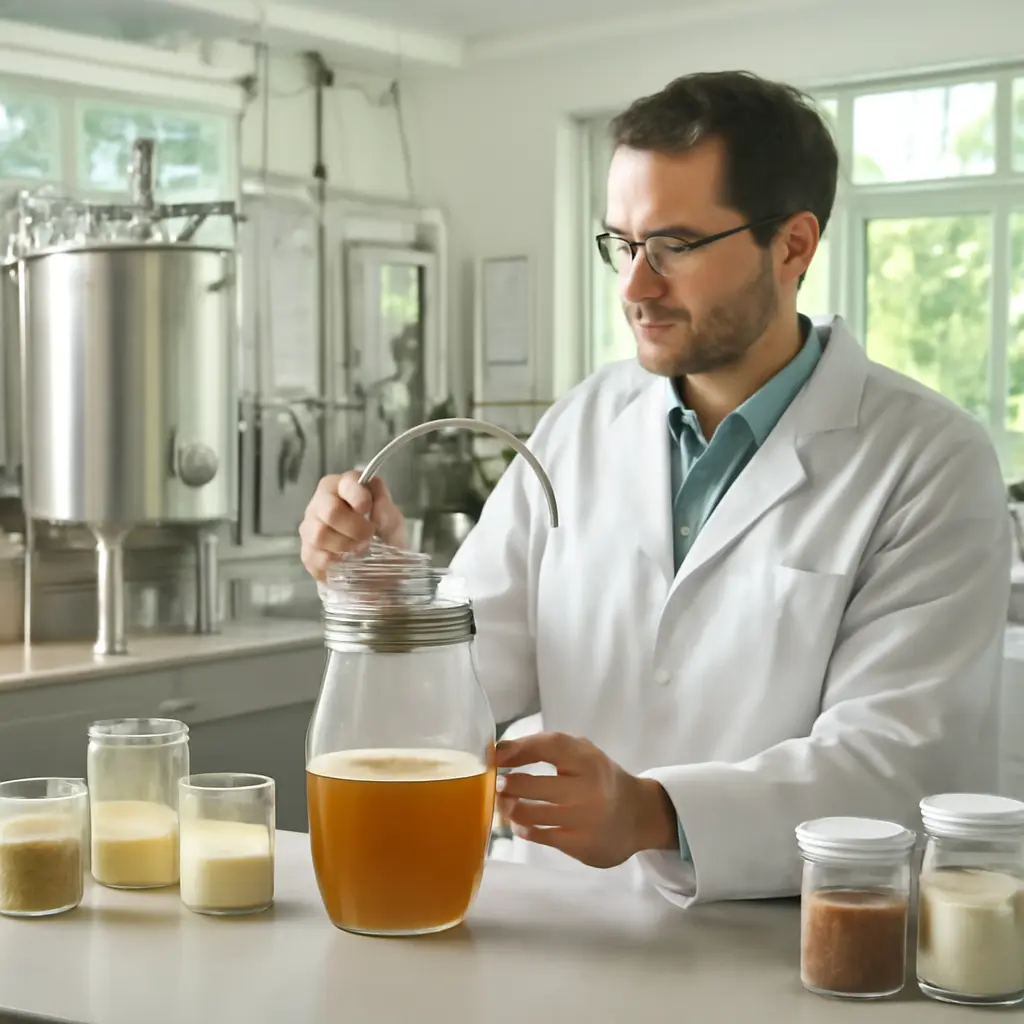
Fermentation-based preservatives are ingredients made when microorganisms such as bacteria or yeast produce compounds that slow spoilage or inhibit unwanted microbes. Biotech startups are using precision fermentation and related processes to develop alternatives to some synthetic preservatives, responding to demand for recognizable ingredients while seeking dependable food safety and shelf life. The opportunity is significant: the World Health Organization estimates that unsafe food causes about 600 million illnesses and 420,000 deaths globally each year, underscoring why any replacement must be proven safe and effective—not simply marketed as “natural.” The field spans established fermentation-derived acids, newer targeted antimicrobials, and commercialization challenges involving regulation, cost, labeling, and performance.
Fermentation science defines the new preservative toolkit
Fermentation is the controlled use of microorganisms or their enzymes to transform raw materials into products. In food preservation, the useful outputs may include organic acids, antimicrobial peptides, bacteriocins, or other metabolites. The U.S. Food and Drug Administration (FDA) describes microbial fermentation as a production method used for food ingredients, but the word “fermented” does not itself establish that an ingredient is safe, effective, or exempt from regulatory review.
The category includes traditional fermentation, in which a culture acts directly on food; ingredient fermentation, in which a microorganism produces a compound that is later recovered; and precision fermentation, in which selected microbes are cultivated to make a specific target molecule. These approaches differ in how the ingredient is produced and used, so their preservation effects and regulatory status must be assessed individually.
Organic acids and cultured ingredients
Organic acids—including lactic and acetic acid—can make an environment less favorable to spoilage organisms by lowering pH and disrupting microbial activity. Cultured ingredients are produced by fermenting food substrates and may contain acids and other fermentation products. They can be used in products such as baked goods, sauces, or prepared foods, but performance depends on the recipe, dose, packaging, and target microbes. A clean-label description does not mean that every cultured ingredient works as a direct substitute for a conventional preservative.
Bacteriocins and antimicrobial peptides
Bacteriocins are antimicrobial substances produced by bacteria, often active against particular groups of related microbes. Nisin, produced by certain strains of Lactococcus lactis, is a well-established example used in some foods to control susceptible bacteria. Startups are investigating additional peptides and microbial metabolites, but narrow activity can be both an advantage and a limitation: a targeted compound may leave beneficial organisms less affected, yet may not control the full range of hazards in a complex food.
Precision fermentation and engineered production
Precision fermentation uses selected or engineered microorganisms as production hosts for a defined ingredient. The microbe functions as a manufacturing platform; the resulting compound is then separated, purified, or formulated for use. This can make consistent production of a specific molecule possible, but it does not automatically make manufacturing inexpensive or the ingredient suitable for every food. Companies must demonstrate strain control, product identity, purity, consistent batches, and safety under the intended conditions of use.
Biotech startups develop fermentation-derived preservative alternatives
A startup’s central task is to turn a promising biological mechanism into a stable, scalable ingredient that works in real products. That means moving beyond laboratory tests: teams need evidence in the intended food matrix, manufacturing processes that meet quality standards, and a regulatory pathway appropriate to the ingredient and its use. The shift from molecule discovery to commercial validation is where fermentation science meets food technology.
From microbial discovery to a usable ingredient
Development commonly begins by screening microorganisms or candidate compounds for activity against target spoilage organisms or pathogens. Researchers then test the candidates at realistic concentrations in foods, since fat, salt, acidity, moisture, and processing conditions can change antimicrobial performance. They also evaluate sensory effects: an ingredient that controls microbes but creates an unacceptable flavor, aroma, or texture is unlikely to succeed commercially.
The U.S. Centers for Disease Control and Prevention identifies several major foodborne pathogens, including Salmonella, Campylobacter, and Shiga toxin-producing Escherichia coli. A preservative’s value therefore depends on the hazard and product it is designed to address, rather than on a general claim that it “fights bacteria.” Preservation is only one layer of food safety alongside sanitation, temperature control, validated processing, and prevention of cross-contamination.
Scaling fermentation and controlling costs
A fermentation process that works in a small vessel may behave differently at industrial scale. Oxygen transfer, heat removal, contamination control, feedstock quality, and recovery of the target compound can all affect yield and cost. Companies must also show that the ingredient remains consistent across batches and retains its activity through storage and food processing. These requirements make manufacturing partnerships, pilot-scale trials, and robust quality systems as important as discovering a promising microbe.
Regulatory review and evidence of safety
In the United States, a food ingredient may be regulated as a food additive or, where the applicable legal criteria are met, determined to be generally recognized as safe (GRAS) for a specified intended use. FDA explains that a GRAS conclusion is tied to the conditions of use and the evidence supporting safety; it is not a blanket approval for every application. Companies must also consider labeling requirements and rules in each market where they intend to sell.
For fermentation-produced ingredients, safety assessment can include the identity and history of the production organism, the possibility of toxins or unwanted metabolites, residual production materials, and the purity of the final ingredient. Where genetic engineering is involved, developers must evaluate the organism and manufacturing process carefully and meet applicable disclosure and regulatory obligations. The exact route depends on the ingredient, its use, and the jurisdiction.
Food applications test whether fermentation can replace synthetic preservatives
Fermentation-derived ingredients are not universal drop-in replacements. A preservative that performs well in one product may fail in another because foods differ in acidity, water activity, fat content, packaging, and storage conditions. The practical question is whether a specific ingredient can provide the required shelf life and safety in a defined product without unacceptable sensory or cost trade-offs.
Baked goods and prepared foods
In bread and other baked goods, fermentation-derived acids or cultured ingredients may help manage mold or bacterial spoilage. Their effectiveness depends on formulation and distribution conditions, while heat processing can affect some compounds. In prepared foods, targeted antimicrobials may complement refrigeration and packaging, but they cannot compensate for inadequate cooking, poor sanitation, or temperature abuse.
Dairy, beverages, and plant-based products
Fermentation is already central to products such as yogurt and cultured beverages, where acid production contributes to characteristic taste and microbial stability. New ingredients may extend this principle to other dairy or plant-based formulations. Yet plant-based products can differ widely in protein, acidity, and nutrient composition, so results from one beverage or alternative-protein product cannot be assumed to apply to another.
Using multiple preservation hurdles
Food manufacturers often combine preservation methods rather than relying on one ingredient. This “hurdle” approach can pair fermentation-derived antimicrobials with refrigeration, acidity control, modified-atmosphere packaging, or heat treatment. Each intervention must be validated as part of the complete process, because interactions among ingredients and processing steps may change both microbial control and product quality.
Market demand and sustainability claims require careful measurement
Interest in fermentation-based preservation is driven partly by consumer preferences for shorter or more familiar ingredient lists. But consumer perception, technical performance, and environmental benefit are separate questions. “Natural,” “fermented,” and “clean label” do not have one universal technical meaning, and an ingredient’s production route alone cannot establish its environmental advantage.
Clean-label positioning and consumer understanding
Some food brands seek ingredients that consumers recognize or perceive as less synthetic. Fermentation may help produce compounds associated with familiar foods, but the final ingredient still needs a clear, lawful name on the label. Companies should avoid implying that a fermentation-derived ingredient is inherently safer or healthier than a conventional alternative without evidence supporting that claim.
Life-cycle assessment and resource use
Fermentation can potentially use renewable feedstocks and controlled production, but its environmental footprint depends on energy, water, feedstock sourcing, downstream purification, and the scale of manufacturing. A credible sustainability comparison needs a defined functional unit—such as the amount of ingredient required to deliver a specified shelf-life benefit—and should account for the full production chain. Without comparable life-cycle data, claims that fermentation is categorically greener remain unproven.
Conclusion: fermentation offers targeted options, not an automatic substitute
Fermentation science gives biotech startups several routes to develop preservative alternatives, from organic acids and cultured ingredients to bacteriocins and precision-fermented compounds. Their commercial promise rests on more than microbial discovery: each ingredient must work in its intended food, scale reliably, meet safety and regulatory requirements, and deliver acceptable cost and sensory quality. For manufacturers and consumers, the useful next step is to evaluate evidence product by product—especially validated shelf-life and safety studies—rather than treating “fermentation-based” as a guarantee of performance or sustainability.
Sources: World Health Organization, Food safety fact sheet, https://www.who.int/news-room/fact-sheets/detail/food-safety; U.S. Food and Drug Administration, Generally Recognized as Safe (GRAS), https://www.fda.gov/food/food-ingredients-packaging/generally-recognized-safe-gras; U.S. Food and Drug Administration, Microorganisms & Microbial-Derived Ingredients Used in Food (formerly EAFUS), https://www.fda.gov/food/food-ingredients-packaging/microorganisms-microbial-derived-ingredients-used-food; U.S. Centers for Disease Control and Prevention, Food Safety, https://www.cdc.gov/food-safety/